



emotii makes shared services language-inclusive in real time across 126+ languages.
emotii makes shared services language-inclusive in real time across 126+ languages.

Signs a shared services model is out of step with the units it supports:
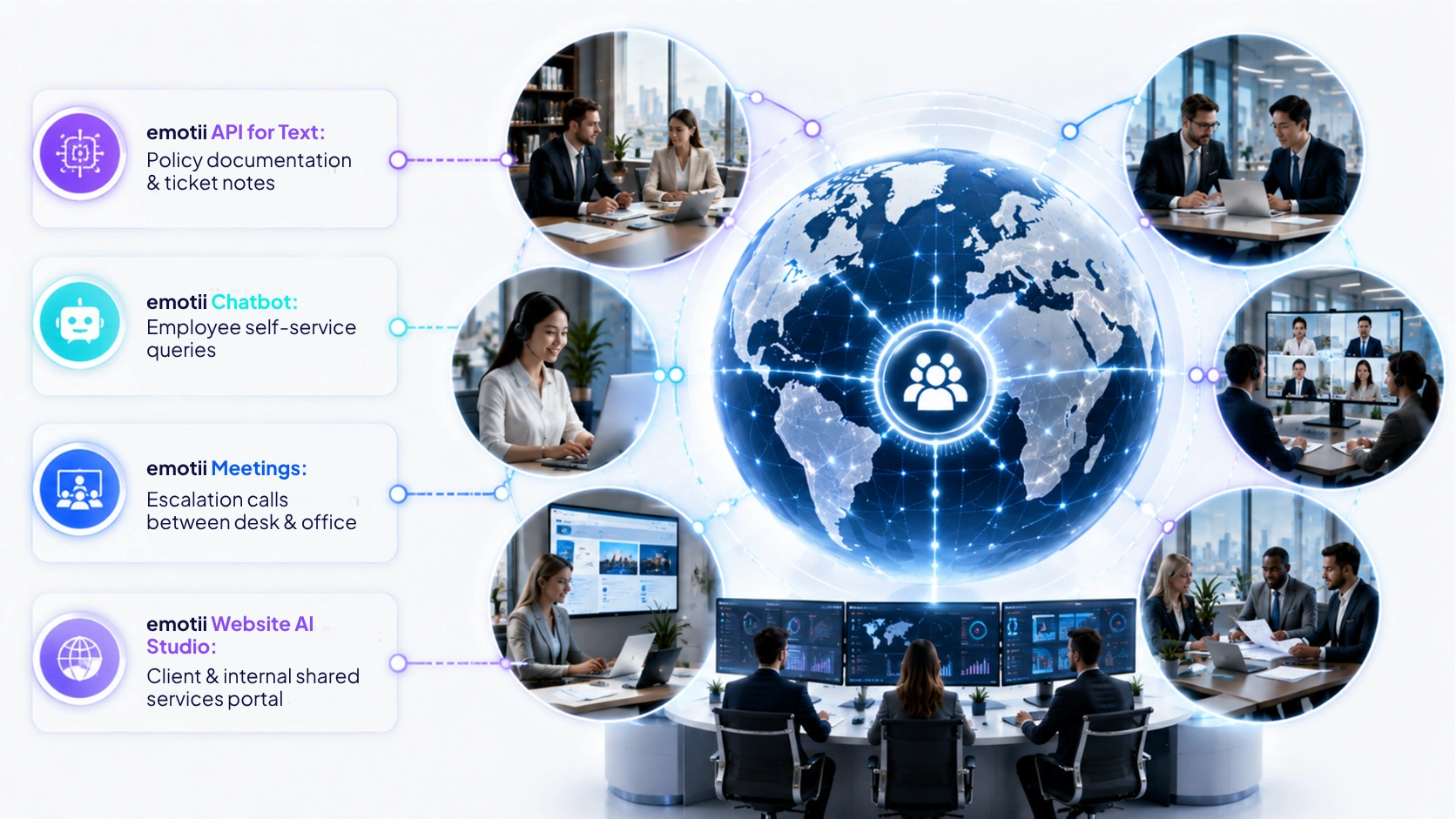
In professional services, an Enterprise Shared Understanding is the alignment of documentation, communication and operational frameworks across all internal teams and client stakeholders. emotii prevents miscommunication, scope creep and hand-off friction by keeping teams and client stakeholders aligned across offices and languages, without losing precision.
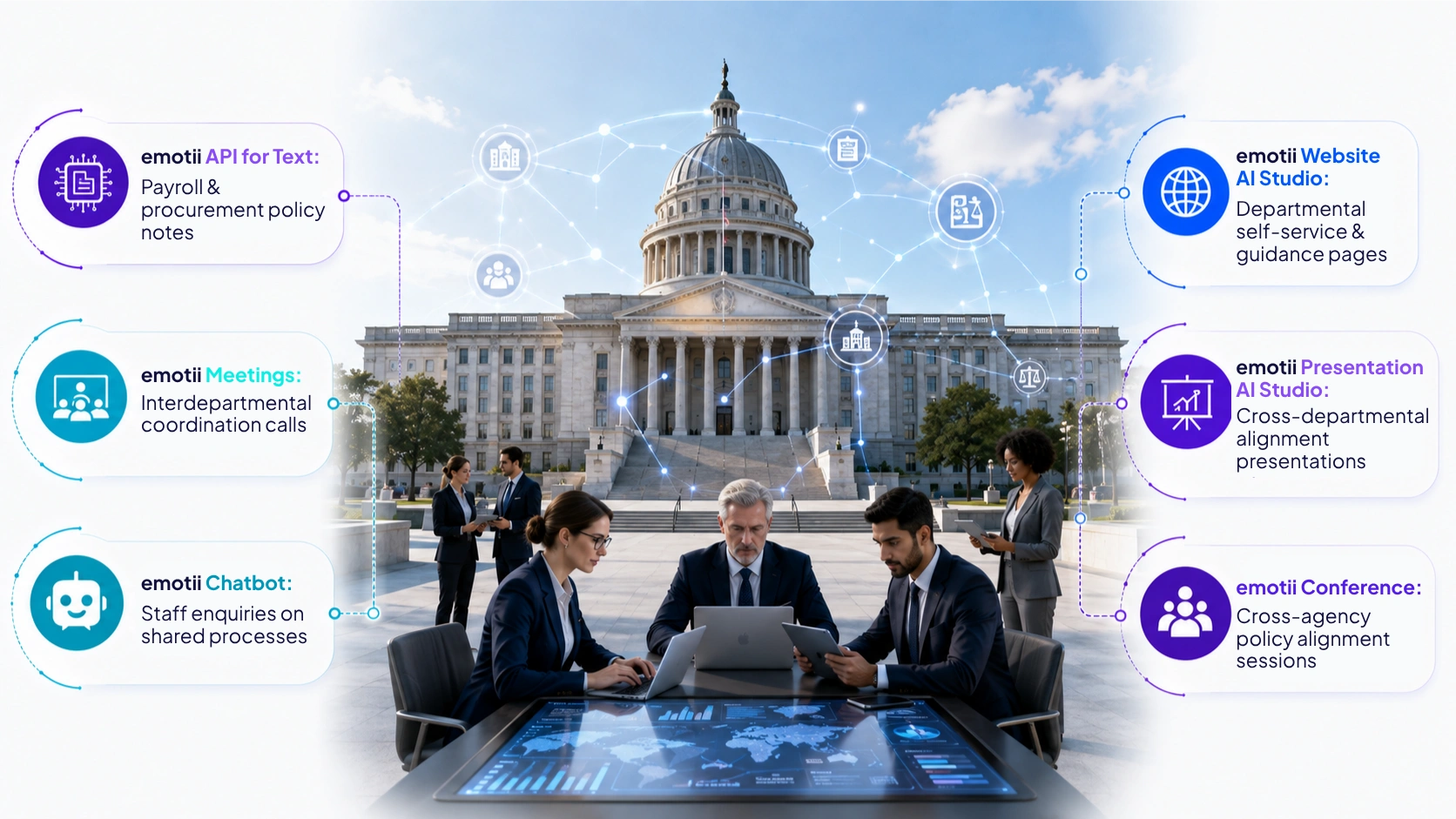
An enterprise shared services in government and public services is a unified framework and common operating model. Miscommunication scatters agencies, data and funding into silos. emotii keeps departmental guidance intact through accurate interpretation in real time, so public sector organisations can move from fragmented departments to integrated, citizen-centric ecosystems.
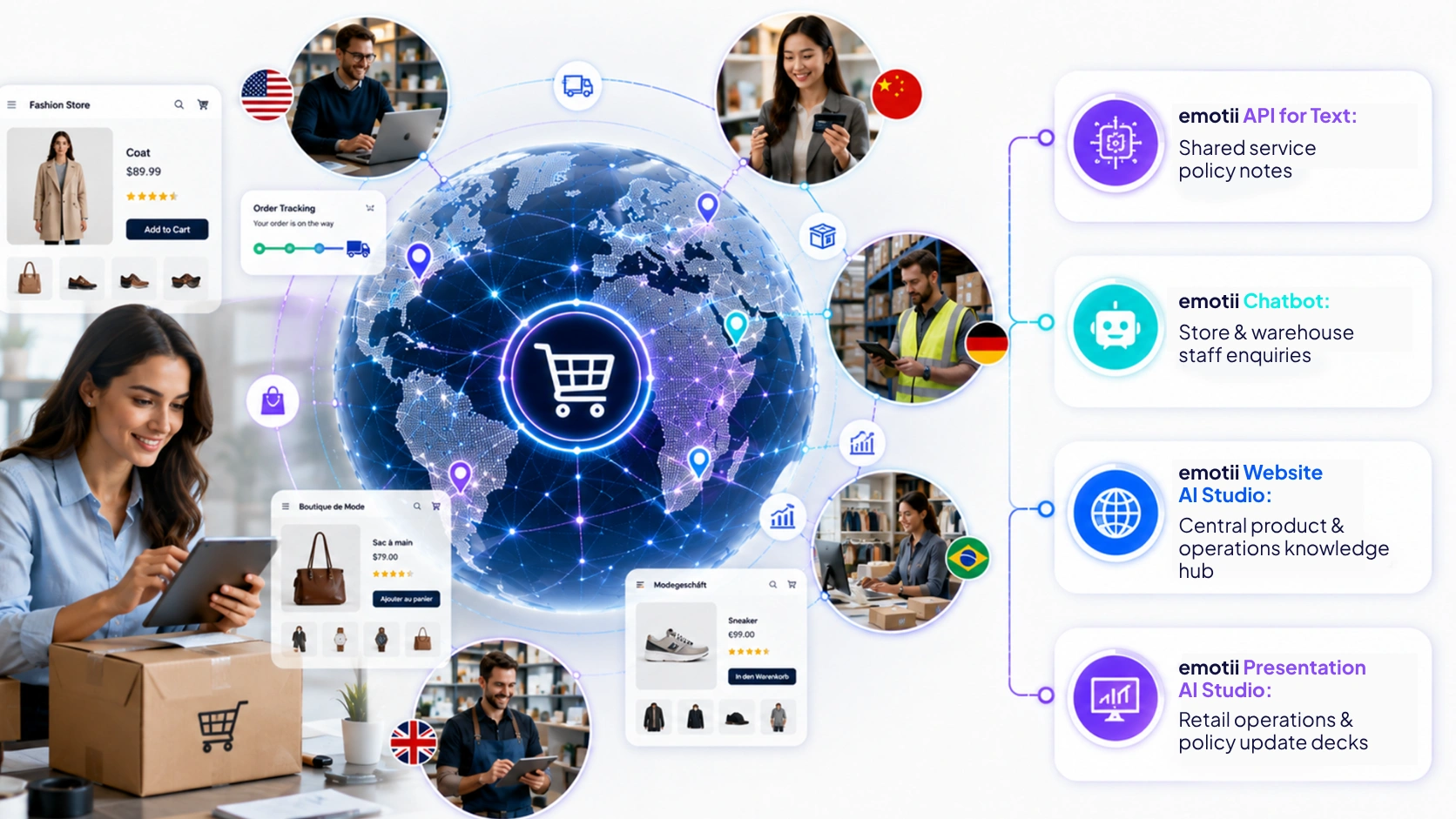
Retailers running a central finance or IT function support stores and warehouses across several countries. They depend on alignment of data, business logic and customer experience across all touchpoints. Language gaps at any stage slow everything down. emotii keeps the query and the response aligned end to end, holding all product data, including descriptions, hierarchies and media, consistent across multiple languages.
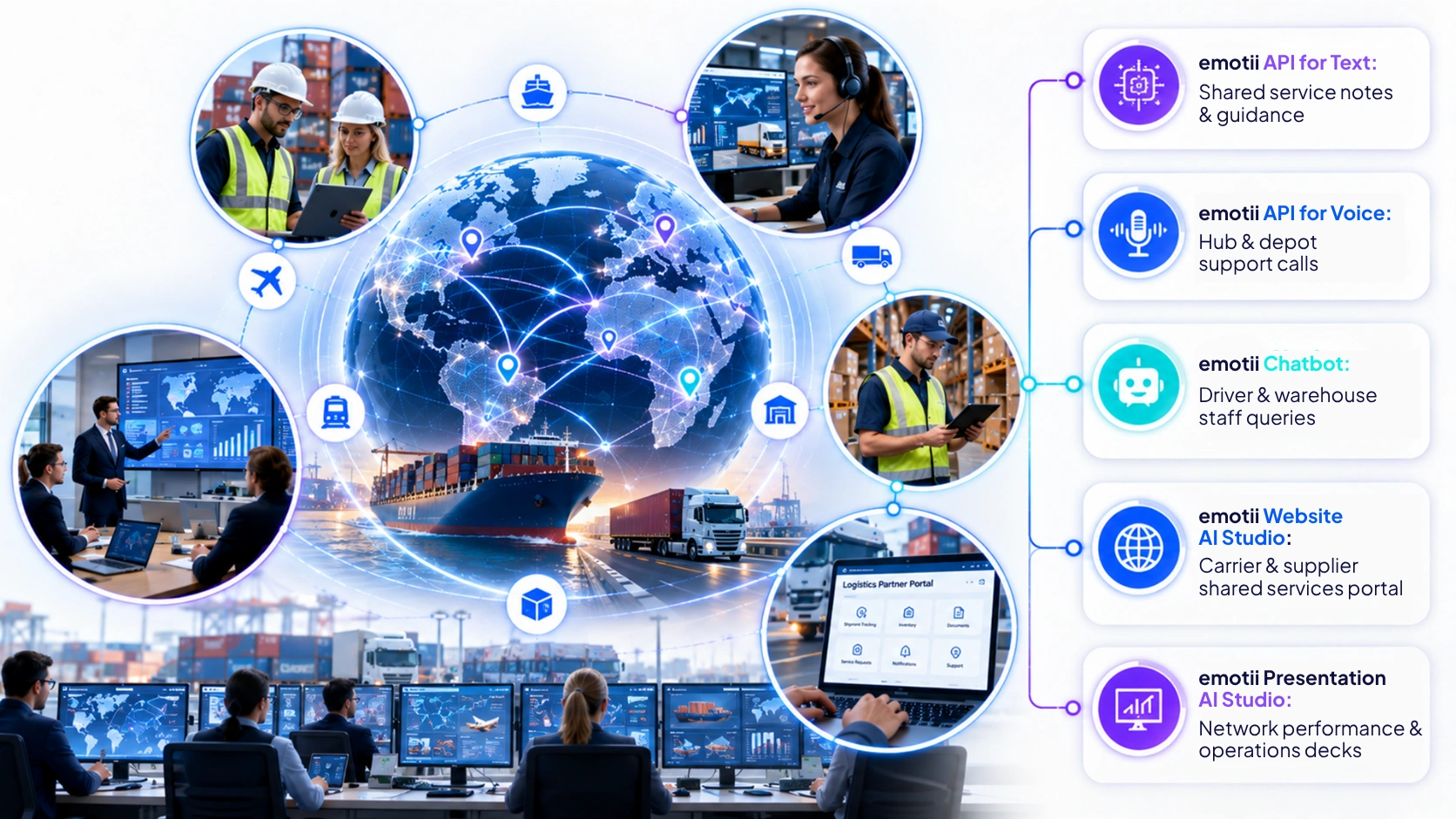
An enterprise shared services in logistics refers to a unified, real-time data environment. It connects all stakeholders, suppliers, warehouses, carriers and customers, without communication gaps. emotii holds that exchange steady across the network, so a query travels intact. All departments act on the same metrics, order status and inventory levels, aligned with one shared understanding.
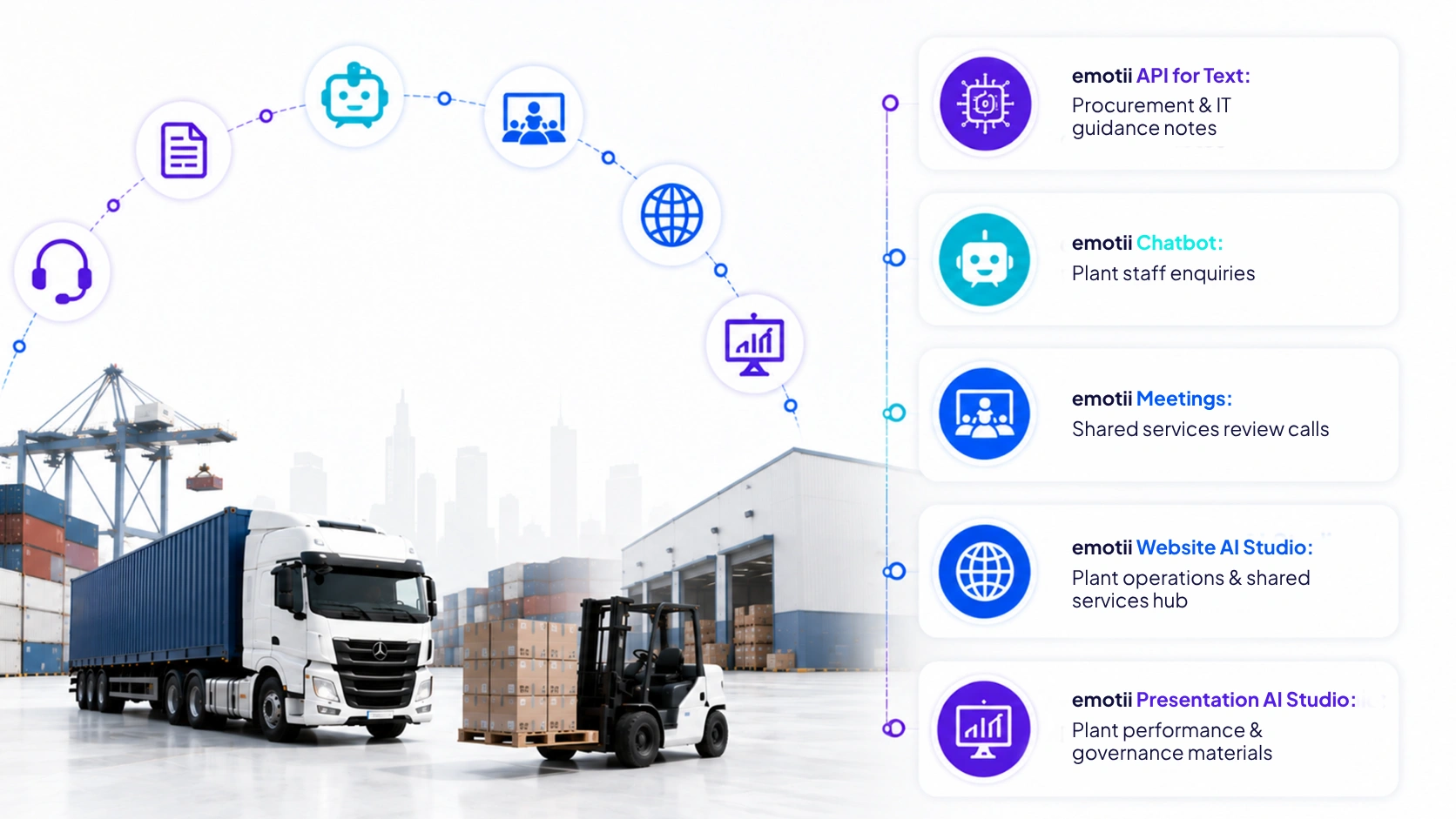
Manufacturers running a shared services centre for procurement, finance and IT align all business and operational departments. A slight disparity in communication creates bottlenecks across design, production, inventory and finance teams. emotii keeps the guidance intact in selected languages, letting teams collaborate, avoid bottlenecks and make agile decisions with the right contextual understanding.
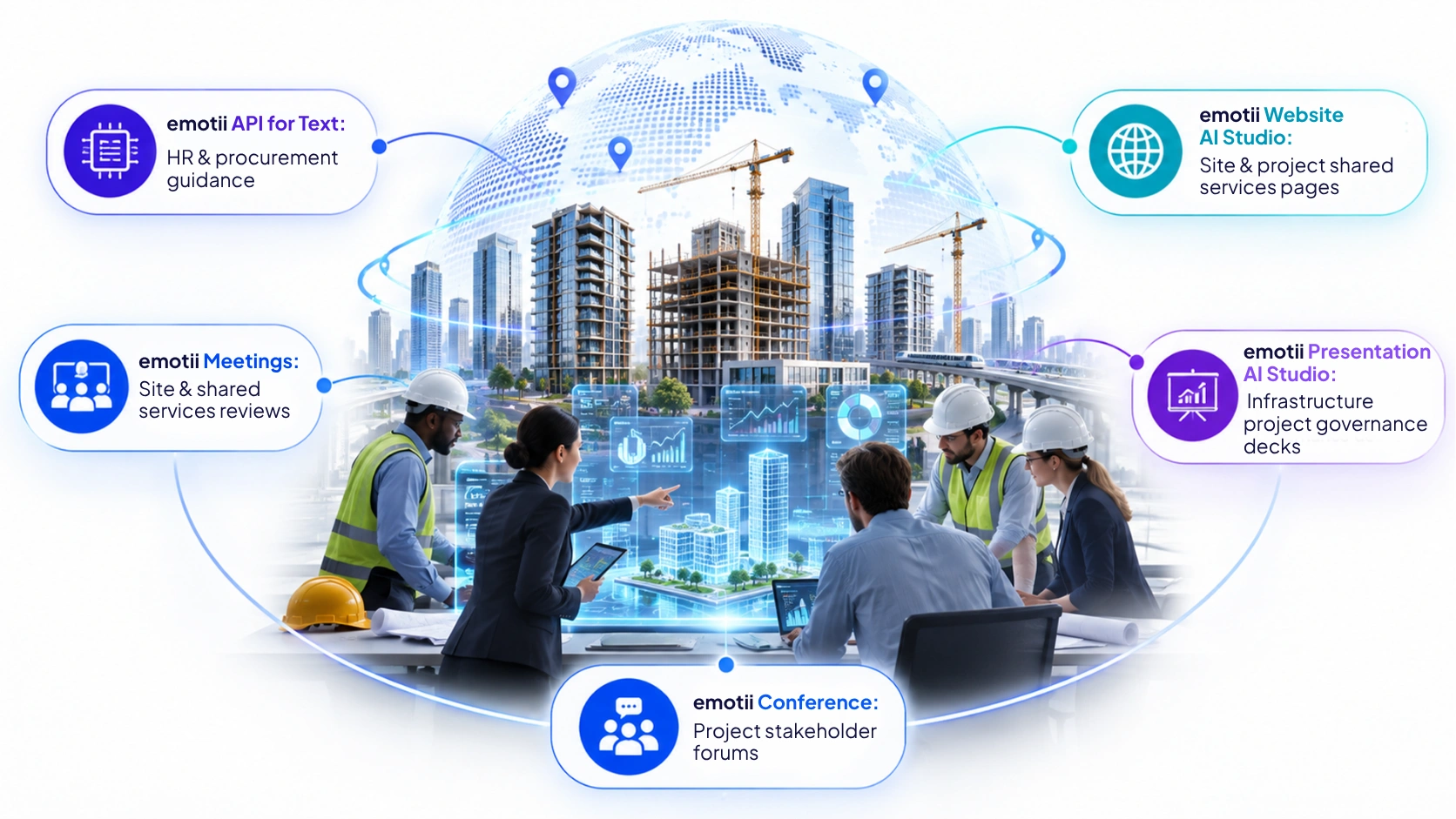
Developers and infrastructure operators run a shared services function across several sites and offices, so the chance of understanding gaps increases. This results in inconsistency across infrastructure, creating confusion in teams dealing with physical assets like buildings, transport and utilities. emotii keeps that reading intact from start to end, so communication stays clear and management and project execution run smoothly.
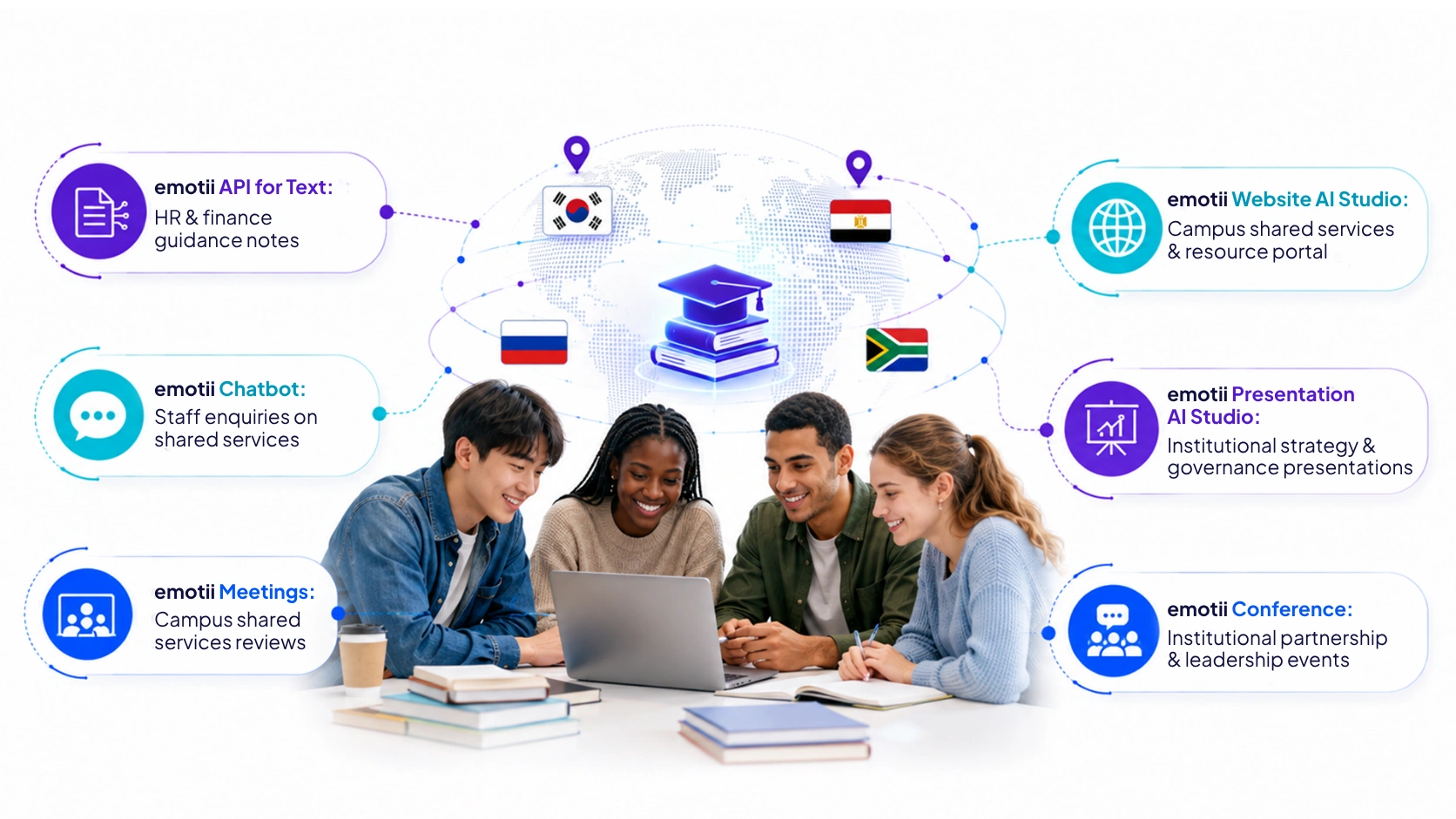
Enterprise shared understanding in education refers to the alignment of goals, values and operational processes across schools, universities and the business sector. That is why meaning gaps should not hinder collaboration among educators, policymakers and corporate partners. emotii carries the intent and context-aware interpretation that equips students, faculties and administrative teams to keep understanding coherent.
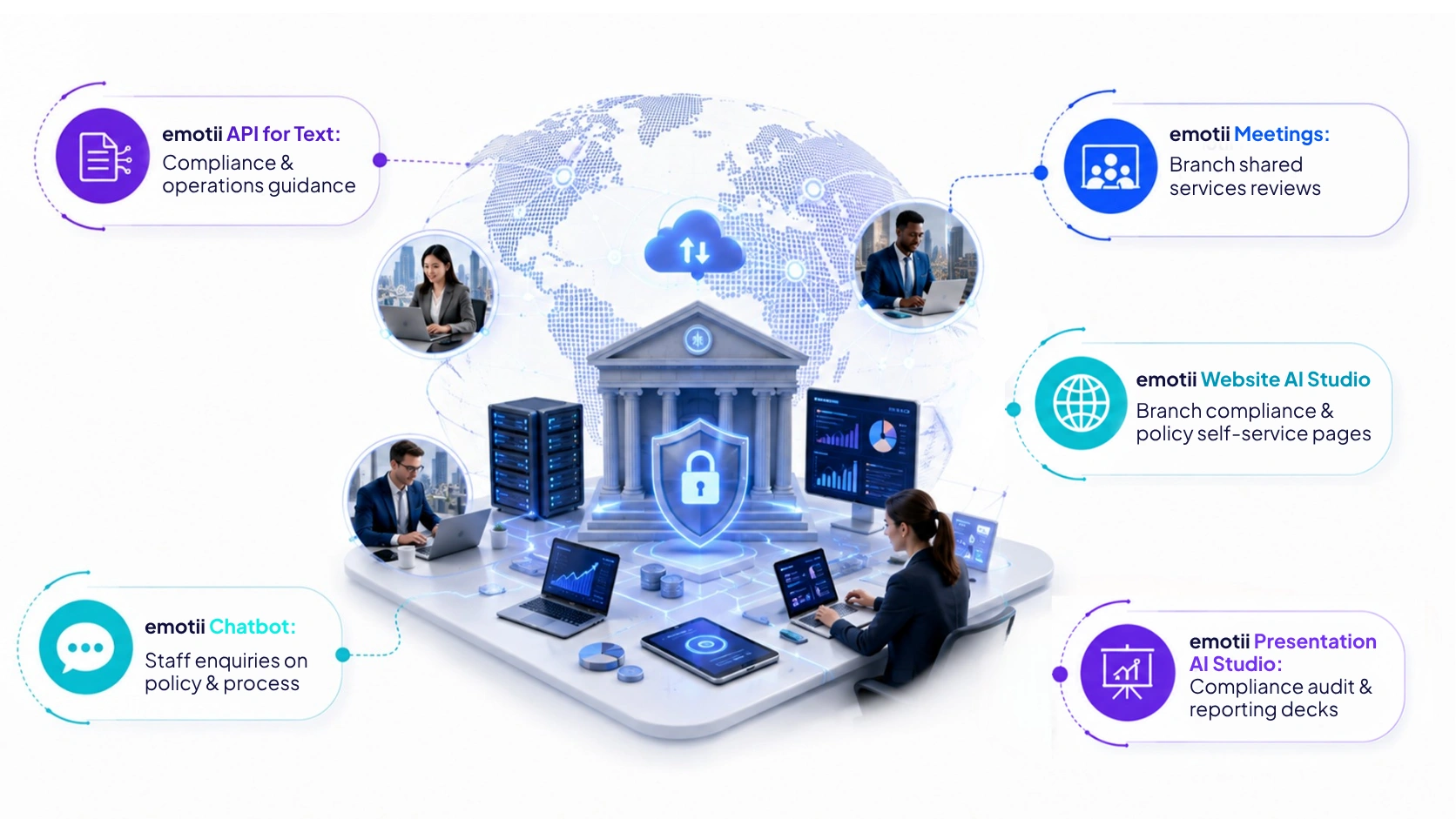
Banks and insurers run a shared services function covering compliance, operations and HR across several branches. The language friction hampers the dissemination of knowledge into a single, unified framework. emotii eliminates language silos and keeps that understanding intact wherever a branch sits, so a compliance query is answered against what the policy actually intended to mean.
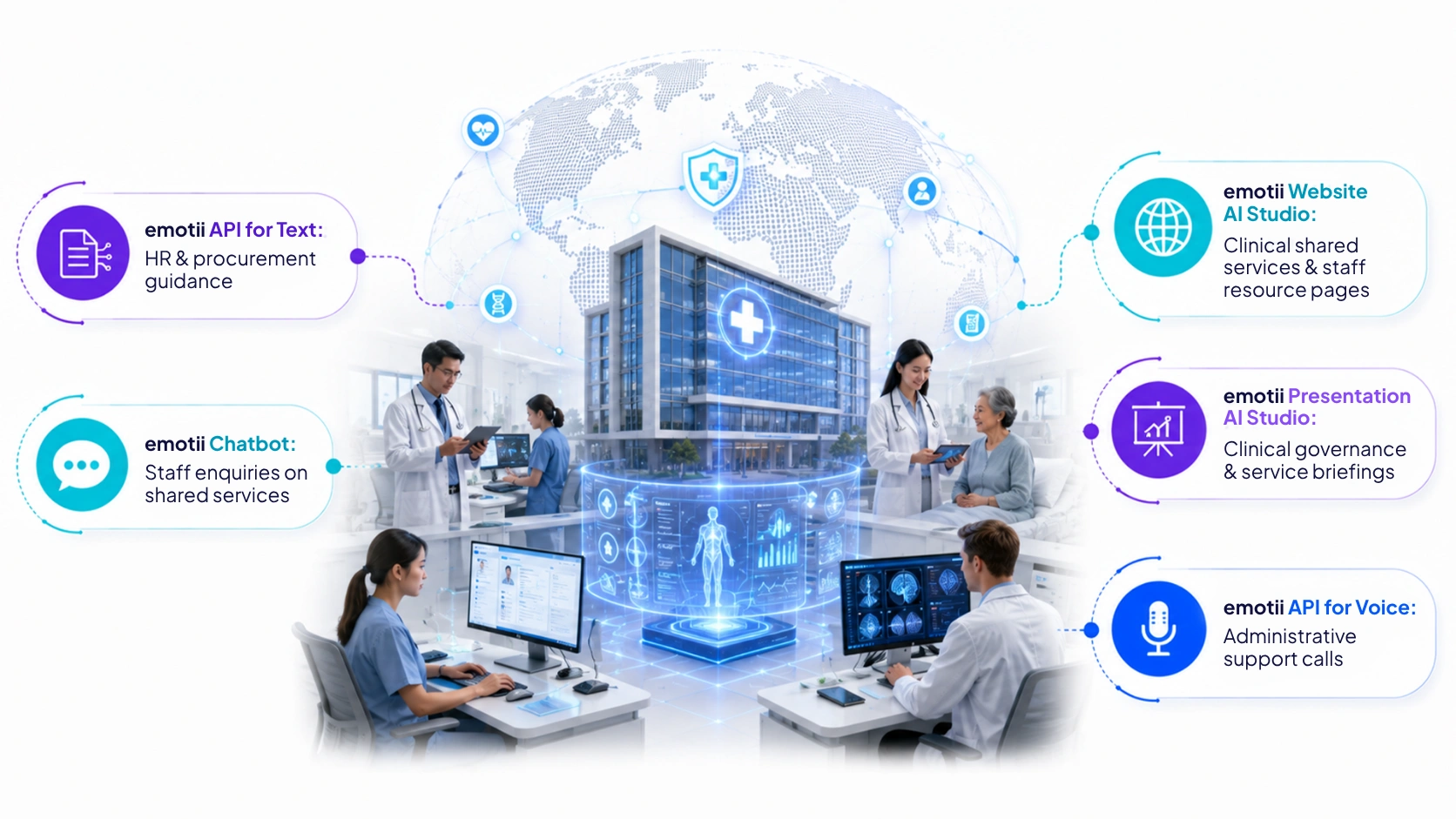
In healthcare, an enterprise shared understanding refers to the systemic alignment of clinical, operational and patient data. It keeps all stakeholders, including providers, administrators and patients, on the same page. emotii bridges the gap by eliminating communication breakdown between disparate data silos and human-level decision-making to drive better care outcomes.
Hotel groups run a shared services function for HR, finance and procurement across several properties, which depends on the alignment of goals, values and operational standards regardless of language. emotii keeps requests and responses aligned across the group with the same contextual and cultural understanding. This drives guest-centric experiences and sustainable growth for stakeholders, from executives and frontline staff to local communities and tourists.
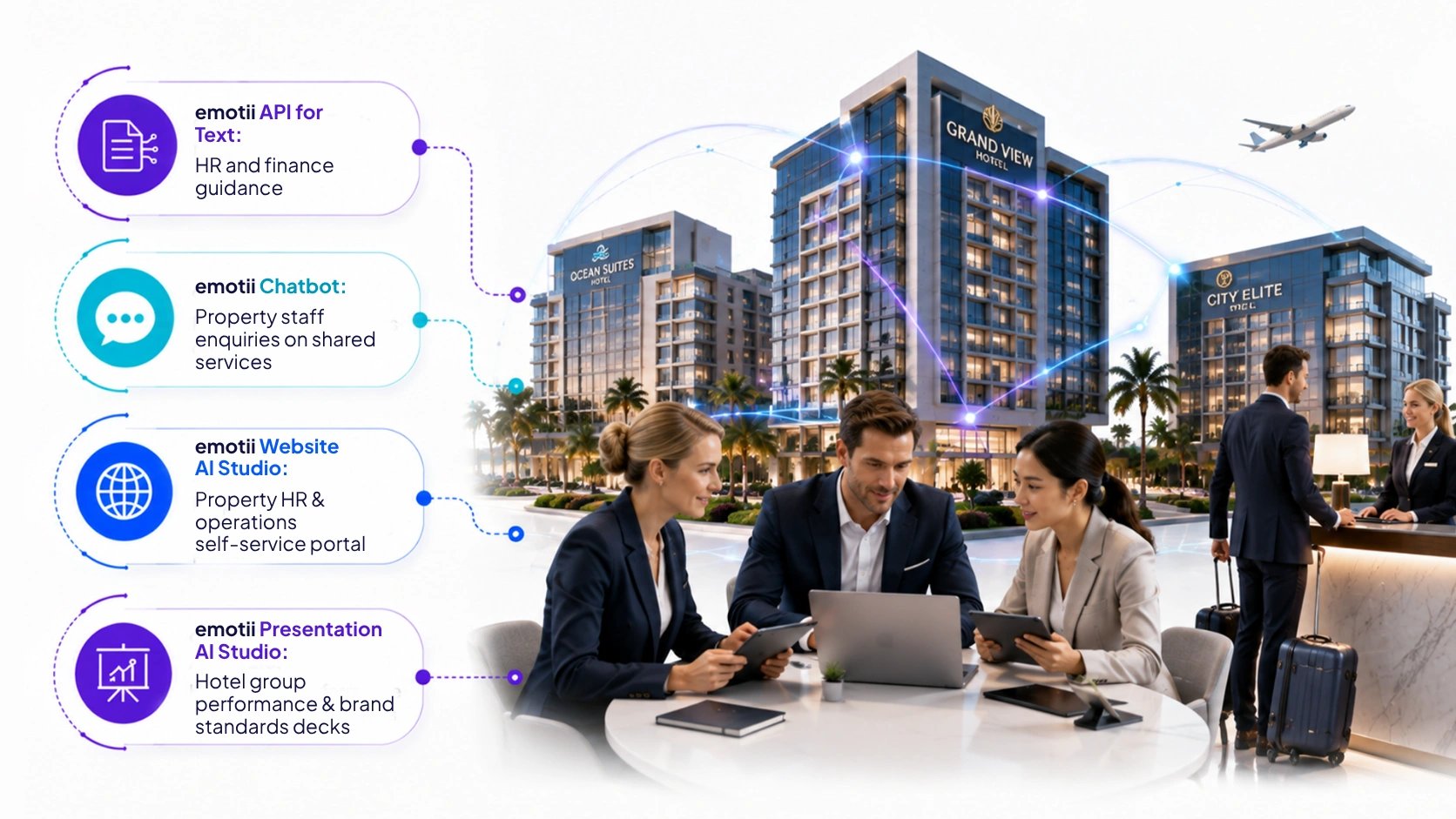
Discover how emotii's intelligent AI conversational solutions let one shared services team answer every business unit with the same clarity, intent and context.
We'd love to hear from you! Please fill out the form and we'll get back to you as soon as possible.