
Global business rarely happens within a single market or language. Teams collaborate across borders, customers expect support in their preferred language & companies regularly share the same products, training and campaigns with audiences around the world.
AI has made this easier to manage. Documents, websites, messages, presentations and other content – of them can now be adapted across languages much faster than through manual workflows. Google Translate has played an important role in this shift. It offers broad language coverage & an accessible way to handle quick translations, everyday communication & basic research.
Professional communication can although come with more demanding requirements. Organisations may need consistent terminology, the right tone, stronger security, API integrations or real-time interpretation during meetings and events.
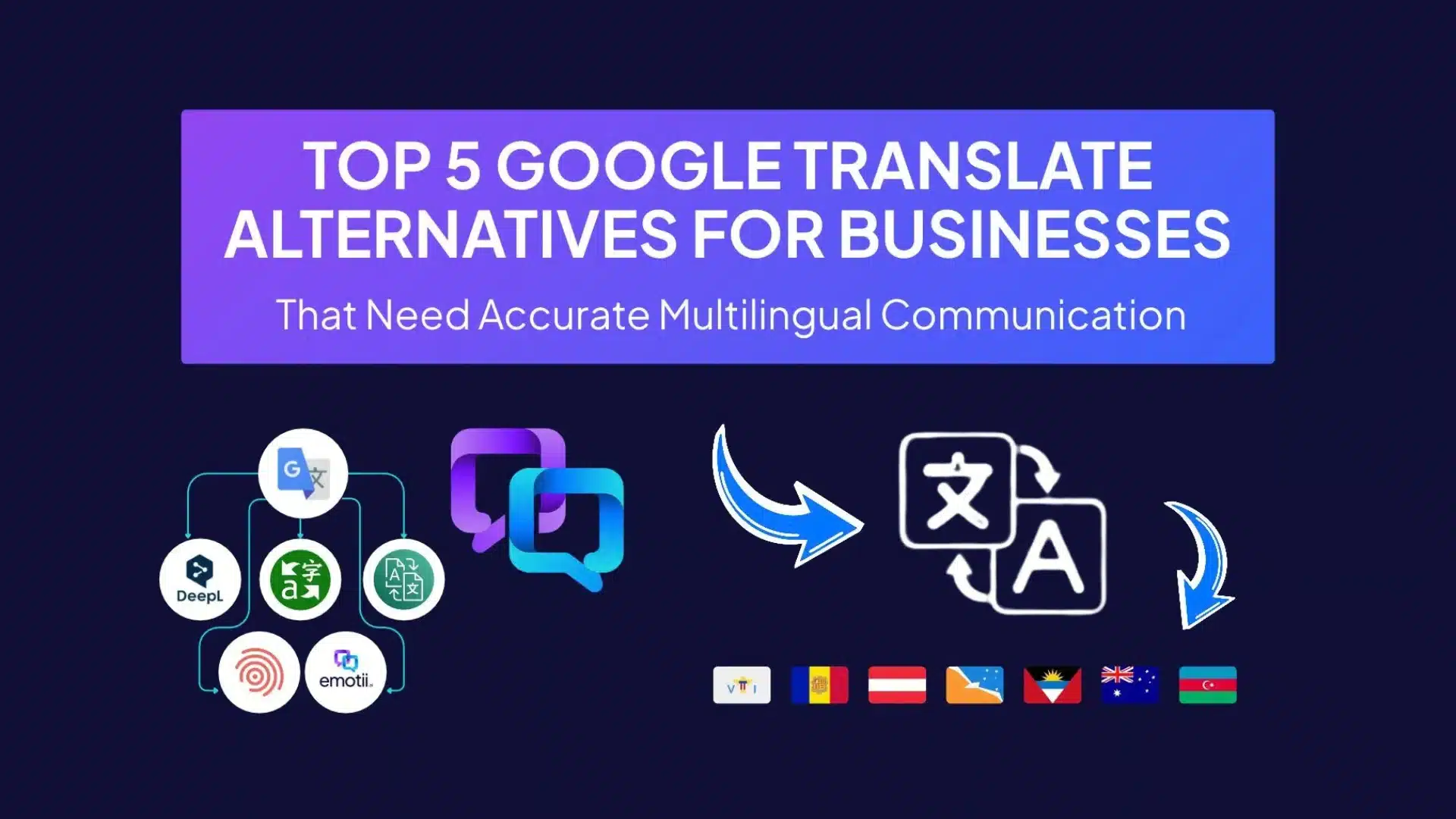
As these needs grow, businesses often look for more specialised tools. In 2026, five platforms worth considering are emotii, DeepL, Microsoft Translator, Amazon Translate and Smartling.
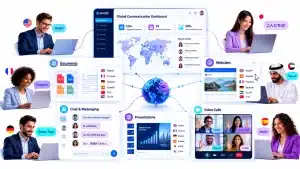
The biggest challenge for a global organisation is often communication itself.
A translated document can help someone understand information. It does not automatically make a multilingual meeting easier to participate in. A translated email can convey a message. It does not solve the challenge of a live customer conversation where both people speak different languages.
Modern businesses communicate through many formats & language technology increasingly needs to support those formats.
Language can directly affect the customer experience.
A support team may receive queries from customers across multiple markets. Expecting every agent to speak every customer language is unrealistic for most organisations.
AI can help teams understand incoming messages, prepare responses and support multilingual interactions. The value increases when the technology can maintain context and terminology across repeated customer conversations.
Global conferences and webinars can attract audiences from several countries.
Providing one language can limit participation. Adding multiple human interpretation channels can also increase logistical complexity and cost. AI-powered multilingual audio, captions and chat can give organisers more ways to make virtual events accessible to international audiences.
Teams working across countries need more than translated documents. They exchange messages, join meetings, review presentations, share videos and collaborate on projects. Language support therefore becomes part of everyday collaboration rather than an occasional activity.

Best for: AI-powered multilingual communication across live and digital formats
emotii takes a different approach to multilingual communication by extending beyond written translation. Its platform brings together AI-powered capabilities across meetings, conferences, video, presentations, websites and conversational experiences.
The platform supports 126+ written languages and 90+ spoken languages across its multilingual solutions.
emotii is particularly relevant when language affects participation and interaction.
A global business may need employees to collaborate in multilingual meetings. An organisation may want to run a virtual conference for participants across different countries. A training team may need to make video and presentation content accessible to international employees.
These situations require language support across formats rather than a standalone text translation function.
emotii combines multilingual language capabilities with communication workflows.
Its Meetings platform supports real-time speech interpretation, live transcripts, recordings, AI summaries and multilingual chat. This can help international teams participate in the same meeting while reducing the need to create separate language-specific sessions.
Its Conference platform is designed for multilingual events, with real-time multilingual audio, live chat and audience interaction. The wider platform also includes Video AI Studio and Presentation AI Studio, allowing businesses to adapt multimedia and presentation content for international audiences.
emotii is not designed to replace every translation management or developer-focused platform.
A company that primarily needs an API for processing millions of text strings may find Amazon Translate more appropriate. An enterprise running a large-scale localisation operation may need Smartling’s workflow infrastructure. emotii is strongest where multilingual communication involves people, interaction and multiple content formats.
emotii is particularly suited to global teams, enterprises, education and training organisations, professional services firms, event organisers and businesses that need real-time multilingual collaboration.
Best for: High-quality written business content
DeepL is one of the most established alternatives to Google Translate and is particularly well known for its focus on natural-sounding written output.
The platform is widely used for documents, emails, business communication and other text-based content. Its business capabilities also include features that allow organisations to manage terminology more consistently.
DeepL is a strong option for businesses that primarily need written content translated across supported languages.
Marketing teams can use it to prepare multilingual content. Customer service teams can use it to understand incoming communications. Employees can use it for documents and internal correspondence.
It can also be useful when businesses need to maintain preferred terminology across repeated content.
One of DeepL’s main strengths is its emphasis on linguistic quality.
Its glossary functionality allows businesses to specify preferred translations for particular terms. This can be valuable for product names, technical terminology and other language that needs to remain consistent.
The platform also supports document translation, making it relevant for businesses working with larger pieces of written content rather than individual sentences.
DeepL’s strongest use case is written language.
Businesses looking primarily for real-time multilingual meetings, conferences or broader communication experiences may need a platform designed around spoken interaction.
Language coverage should also be assessed based on the specific markets a business serves. A high overall language count does not necessarily mean every language pair will perform equally well for every type of content.
DeepL is best suited to organisations that deal heavily with written communication and want a user-friendly AI translation solution with additional terminology controls.
Best for: Microsoft and Azure-based organisations
Microsoft Translator is designed for organisations that want to integrate multilingual capabilities into applications, services and broader technology environments.
This makes it particularly relevant to businesses already invested in Microsoft’s ecosystem.
Microsoft Translator can support multilingual applications, internal communication and developer-led workflows. Companies using Azure can also incorporate translation capabilities into their own products and services rather than relying entirely on a separate standalone interface.
This can be useful for customer-facing applications, internal systems and digital products that need multilingual functionality.
Its biggest advantage is ecosystem integration.
For organisations already using Microsoft technologies, adding language capabilities through Microsoft’s infrastructure can simplify implementation and administration. Customisation options can also help businesses working with specialised terminology or domain-specific language.
Microsoft Translator is particularly attractive when it fits into an existing Microsoft environment.
A small team looking for a straightforward interface for occasional written translation may not need the wider infrastructure. Businesses should also evaluate the actual language pairs and content types they use before choosing a platform.
Microsoft-heavy enterprises, technology companies and organisations building multilingual applications on Azure are likely to get the most value from Microsoft Translator.
Best for: Developer-led multilingual applications
Amazon Translate approaches the problem from a cloud and API perspective. It is designed for developers and businesses that want to incorporate machine translation into applications, websites, workflows and other systems.
Amazon Translate can be useful when translation needs to happen automatically inside an existing application or content pipeline.
For example, an organisation could incorporate multilingual functionality into a customer support platform or use an API to process large volumes of content without requiring employees to manually copy and paste text between applications.
Scalability is a major advantage.
Businesses already using AWS can incorporate Amazon Translate into an existing cloud environment and build language capabilities into their own workflows. Its developer-focused approach also makes it suitable for organisations where multilingual communication needs to become part of a software product rather than remain a standalone activity.
The developer-first approach can also be a limitation.
Marketing teams, communications professionals and other non-technical users may prefer a dedicated workspace with more built-in content and collaboration features.
Amazon Translate also focuses primarily on translation services, so organisations looking for live multilingual meetings, events or broader communication tools may need additional technology.
Amazon Translate is particularly suitable for software companies, ecommerce businesses, technology teams and AWS-based organisations that need scalable translation through APIs.
Best for: Enterprise localisation and multilingual content management
Smartling takes a broader approach to language operations.
Rather than focusing only on converting one piece of text into another language, its platform is designed to help organisations manage larger localisation programmes.
Smartling is particularly relevant to businesses with substantial amounts of multilingual content. A global company may have websites, product content, applications, support documentation and marketing assets that all need to be managed across different markets.
When several teams are involved, simply having access to a translation engine is rarely enough. Content needs to move through workflows, terminology needs to remain consistent and teams need visibility into the overall process.
Smartling’s strength is its translation management and localisation capabilities.
It can help organisations coordinate multilingual content at scale and integrate translation into broader workflows.
This makes it particularly useful for enterprise teams where localisation is an ongoing operational process rather than an occasional requirement.
Smartling may provide more functionality than a small business needs.
An organisation translating a few documents each month may not need a full translation management environment. The platform becomes more valuable as content volumes, markets, stakeholders and workflows become more complex.
Smartling is best suited to larger enterprises, ecommerce organisations, global brands and companies running structured localisation programmes across several markets.

The right Google Translate alternative depends on how language technology will actually be used inside the organisation.
Several factors should be evaluated before making a decision.
Accuracy remains fundamental. However, businesses should test accuracy against their own content. A platform may perform well with general text but produce different results with technical documentation, financial terminology, marketing copy or conversational language.
Context can determine whether a translated sentence sounds natural and communicates the intended meaning. Businesses should look for tools that can work with terminology, surrounding content and the purpose of the communication.
If employees, customers or event participants need to communicate live, text translation alone may not be enough. Consider whether the platform supports speech interpretation, live captions, transcripts and multilingual interaction.
AI translation is increasingly becoming part of a broader collection of capabilities. Look beyond basic text conversion. Depending on your needs, useful features can include transcription, summarisation, terminology management, content adaptation, speech processing and workflow automation.
Business communication can contain sensitive information. Before adopting a platform, organisations should understand its data handling practices, security controls, privacy policies and enterprise safeguards.
This is particularly important for internal meetings, customer conversations and confidential documents.
Enterprise customers may require administration controls, integrations, user management, compliance capabilities and support. The more widely a platform will be deployed, the more important these considerations become.
A tool that works well for ten employees may not be suitable for 10,000. Think about future language requirements, content volumes, markets, users and integrations before selecting a platform.
Price should be evaluated alongside the amount of work the platform removes. A low-cost translation tool may be sufficient for occasional tasks. A more comprehensive platform may justify a higher investment if it reduces manual interpretation, localisation or content-production work.
Finally, consider how easily the platform fits into existing processes.
A technically powerful tool can create friction if employees need extensive training or developers have to build complex workarounds. The best solution is one that matches the organisation’s technical capabilities and communication workflows.
Multilingual business communication often happens in real time. International meetings, webinars, conferences and global collaboration all require people to understand and respond quickly. AI-powered interpretation, live captions and transcription can help teams communicate without disrupting the conversation.
This is where emotii fits. Its Meetings platform supports real-time multilingual conversations with speech interpretation, live transcripts, multilingual chat, recordings and AI summaries. Its Conference platform adds multilingual audio, live chat and audience interaction for virtual events.
emotii also supports the content around these interactions. Teams can adapt presentations and videos for global audiences, extending multilingual communication across meetings, training, events and everyday collaboration.
There is no single Google Translate alternative that suits every organisation. The right choice depends on what the business communicates, who needs to communicate, the languages involved and how language support fits into existing workflows.
emotii serves a different need, focusing on multilingual communication across meetings, conferences, presentations, videos and other interactive experiences. As businesses become more global, these capabilities can help teams communicate more effectively, reach wider audiences and reduce the friction caused by language differences.
For organisations looking to make multilingual collaboration part of everyday communication, explore emotii’s AI-powered communication platform. Meetings, Conference, Video AI Studio and other multilingual capabilities can help global teams work and communicate across languages.
It depends on your needs. DeepL suits written content, Microsoft Translator works well with Microsoft environments, Amazon Translate supports developer workflows, Smartling focuses on localisation & emotii supports real-time multilingual communication.
DeepL can be a strong choice for businesses that prioritise natural-sounding written content and terminology consistency. The right option still depends on your languages, content types and specific requirements.
Businesses should look for speech interpretation, live captions, transcription and multilingual interaction. emotii is designed specifically for use cases such as multilingual meetings, conferences and global collaboration.
Consider accuracy, context awareness, language coverage, AI features, security, scalability, integrations and cost. The platform should also fit naturally into your existing communication and content workflows.